

This post may contain affiliate links. Please see my disclosure policy
This creamy polenta is made with milk, chicken broth, and a little cream cheese for the silkiest, most flavorful side dish. Ready in 25 minutes!
Side dishes are my nightly struggle. My family rarely agrees on vegetables unless it’s Corn on the Cob or a simple Side Salad, and let’s be honest, that’s mostly about the butter and the dressing! So when I find a side that makes everyone happy, it goes into regular rotation, and this creamy polenta is one of them.

It cooks on the stovetop in one pot with just five ingredients, and simmering the polenta in milk and chicken broth gives it so much more flavor than plain water. The real secret is stirring in a couple ounces of cream cheese at the end, which makes it extra smooth and rich without any heavy cream. It’s the perfect cozy base for pork chops, chicken, or anything with a sauce, and you can switch it up with different cheeses and seasonings to match whatever you’re serving.
Erin’s Notes
- Five simple ingredients: milk, chicken broth, polenta, salt, and cream cheese.
- Ready in 25 minutes: quick enough for a busy weeknight.
- Extra creamy: the cream cheese makes it silky and rich without heavy cream.
- More flavor than water: milk and broth give the polenta a savory, well-seasoned base.
- Easy to customize: stir in parmesan or cheddar, or swap the salt for your favorite seasoning blend.
- Goes with everything: from weeknight pork chops to slow-cooked pork and saucy chicken.
What is Polenta?
Polenta is both the name of a classic Northern Italian dish and the coarsely ground cornmeal used to make it. It is usually made from yellow corn, and when it simmers slowly in liquid, the grains soften and release their starch to become thick, creamy, and comforting. It started as a humble, inexpensive farmhouse staple that kept people full for hours, and today you’ll find it on dinner tables and restaurant menus all over the world.
For this recipe you’ll want dry, uncooked polenta, the grainy kind sold in a bag or box. You’ve probably also seen precooked polenta sold in a tube. That kind is firm enough to slice into rounds and pan fry until crispy, but it won’t give you this soft, spoonable texture.

Polenta vs Grits vs Cornmeal
All three are ground corn, but they aren’t exactly the same:
- Polenta is a coarse grind, traditionally from yellow corn. It cooks up with a little bit of texture and body, which is one of the things I love about it.
- Grits are a Southern staple, most often made from white corn (yellow grits exist too), and some varieties are made from hominy, which is corn that has been soaked in an alkaline solution. Grits tend to cook up softer and smoother. You can swap them into many polenta recipes, but the color, texture, and cooking time will be a little different.
- Cornmeal can be yellow or white and comes in fine, medium, and coarse grinds. Fine cornmeal is what you use for Southern Cornbread and Corn Muffins. Coarse-ground cornmeal is often labeled and sold as polenta.

Ingredient Notes
- Milk: Whole milk makes the creamiest polenta, but 2% or skim work fine too.
- Chicken broth: Cooking in broth instead of water adds a lot of flavor. I use low-sodium broth so I can control the salt. Vegetable broth makes it vegetarian, and water works if that’s what you have, though the flavor will be milder.
- Uncooked polenta: Look for regular dry polenta (coarse-ground cornmeal), not the precooked tube kind and not instant polenta.
- Salt: Fine sea salt gives the cleanest flavor.
- Cream cheese: This is the secret to extra creamy polenta. I often use Reduced-fat cream cheese, but full-fat cream cheese works too; it just makes a slightly thicker, richer polenta.

Creamy Polenta
Ingredients
- 2 cups milk
- 1 cup chicken broth
- 3/4 cup uncooked polenta
- 1 teaspoon salt
- 2 ounces cream cheese
Instructions
- In a saucepan over medium heat bring the milk and chicken broth to a simmer. Be careful not to heat too fast or the milk with scald on the bottom of the pan and it will boil over quickly.2 cups milk, 1 cup chicken broth
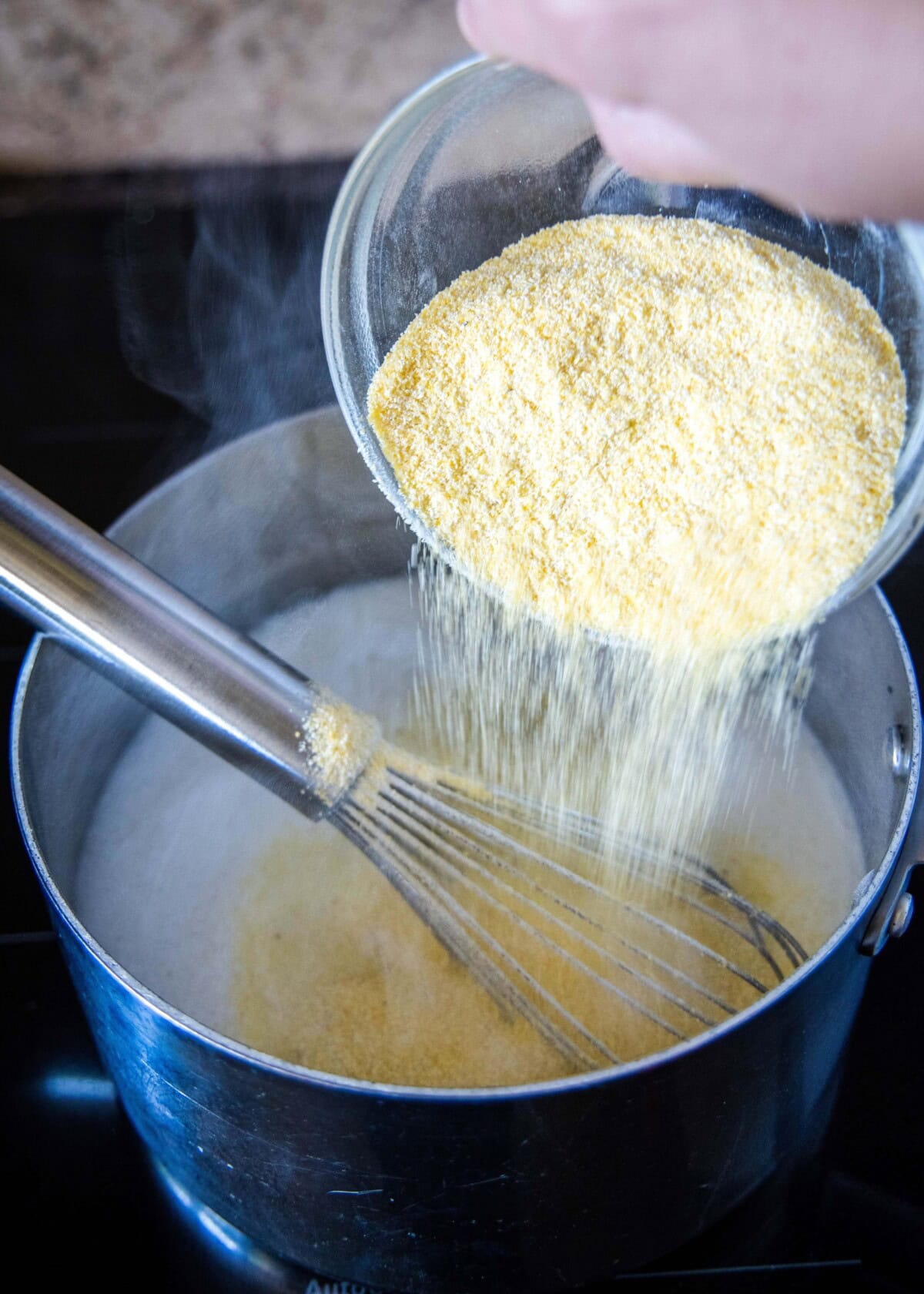
- Once it is starting to simmer, gradually add the polenta while stirring to prevent it from clumping. Reduce the heat to low.3/4 cup uncooked polenta
- Let this cook for about 15-20 minutes for it to absorb all the liquid and soften. You will want to stir frequently, as it gets thick it will start to bubble.
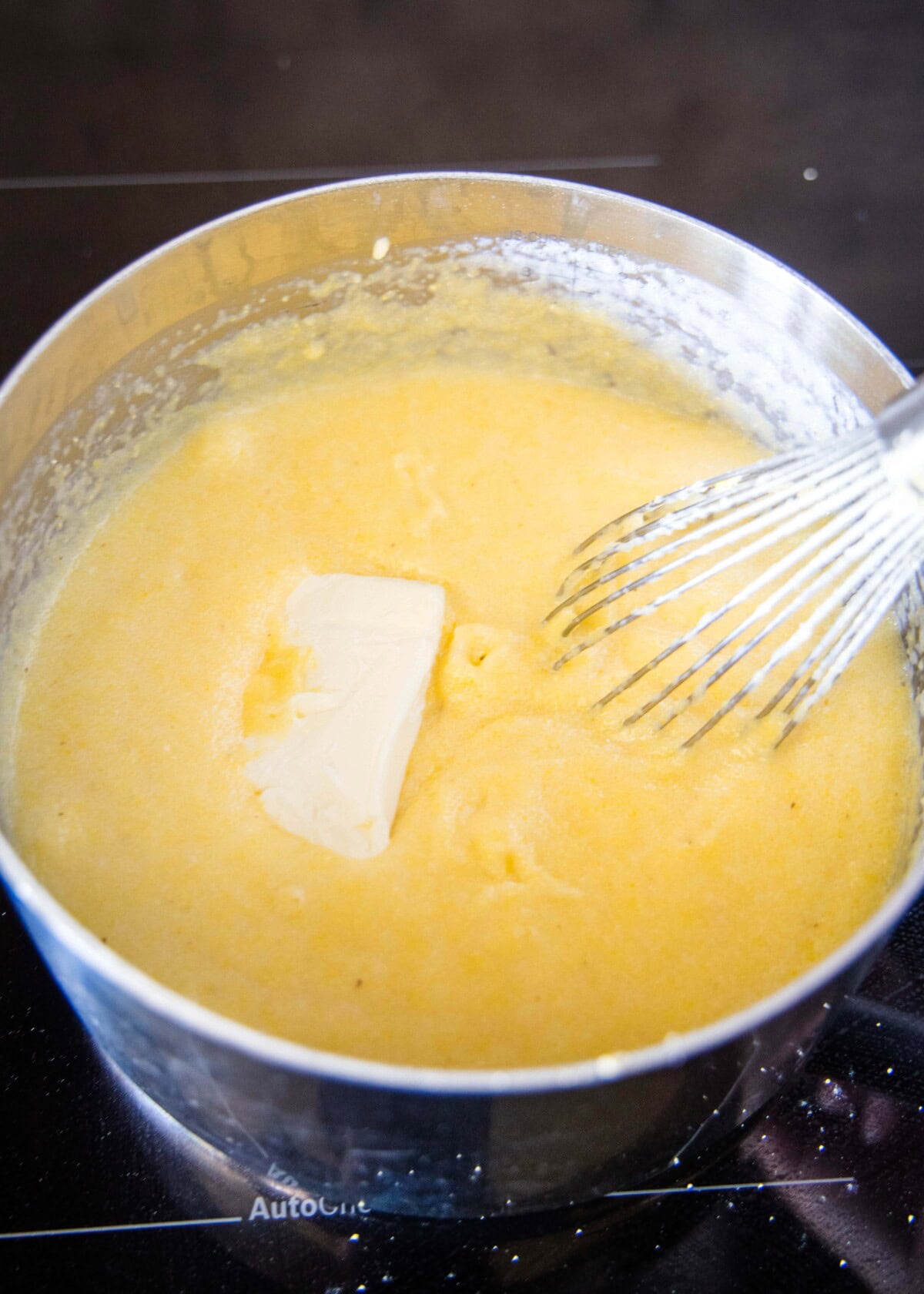
- Remove from the pot from heat and stir in the salt and cream cheese until it is fully incorporated.1 teaspoon salt, 2 ounces cream cheese
- Serve immediately
Notes
- Use regular dry polenta, not instant or the precooked tube kind.
- Low-sodium broth is recommended so you can control the salt.
- Polenta thickens as it sits. Loosen with a splash of warm milk or broth if needed.
- Store leftovers in the fridge up to 3 days. Reheat over medium-low heat with about 1/4 cup broth or water, stirring until creamy.
Nutrition
Nutrition information is automatically calculated, so should only be used as an approximation.
How To Make Creamy Polenta
- Heat the liquids. Add the milk and chicken broth to a saucepan and bring them to a simmer over medium heat. Don’t rush it with high heat. Milk can scorch on the bottom of the pan and boil over in a hurry, so keep an eye on it.
- Add the polenta. Once the liquid starts to simmer, slowly pour in the polenta while stirring constantly so it doesn’t clump. Then turn the heat down to low.
- Simmer and stir. Let the polenta cook for about 15 to 20 minutes, until it has absorbed the liquid and the grains are soft. Stir frequently, especially as it thickens and starts to bubble. Stirring keeps it from sticking to the bottom and helps release the starches that make it creamy.
- Finish with salt and cream cheese. Take the pot off the heat and stir in the salt and cream cheese until fully melted and smooth. (I also think it looks pretty with a few ribbons of cream cheese swirled through, so stir as much or as little as you like!)
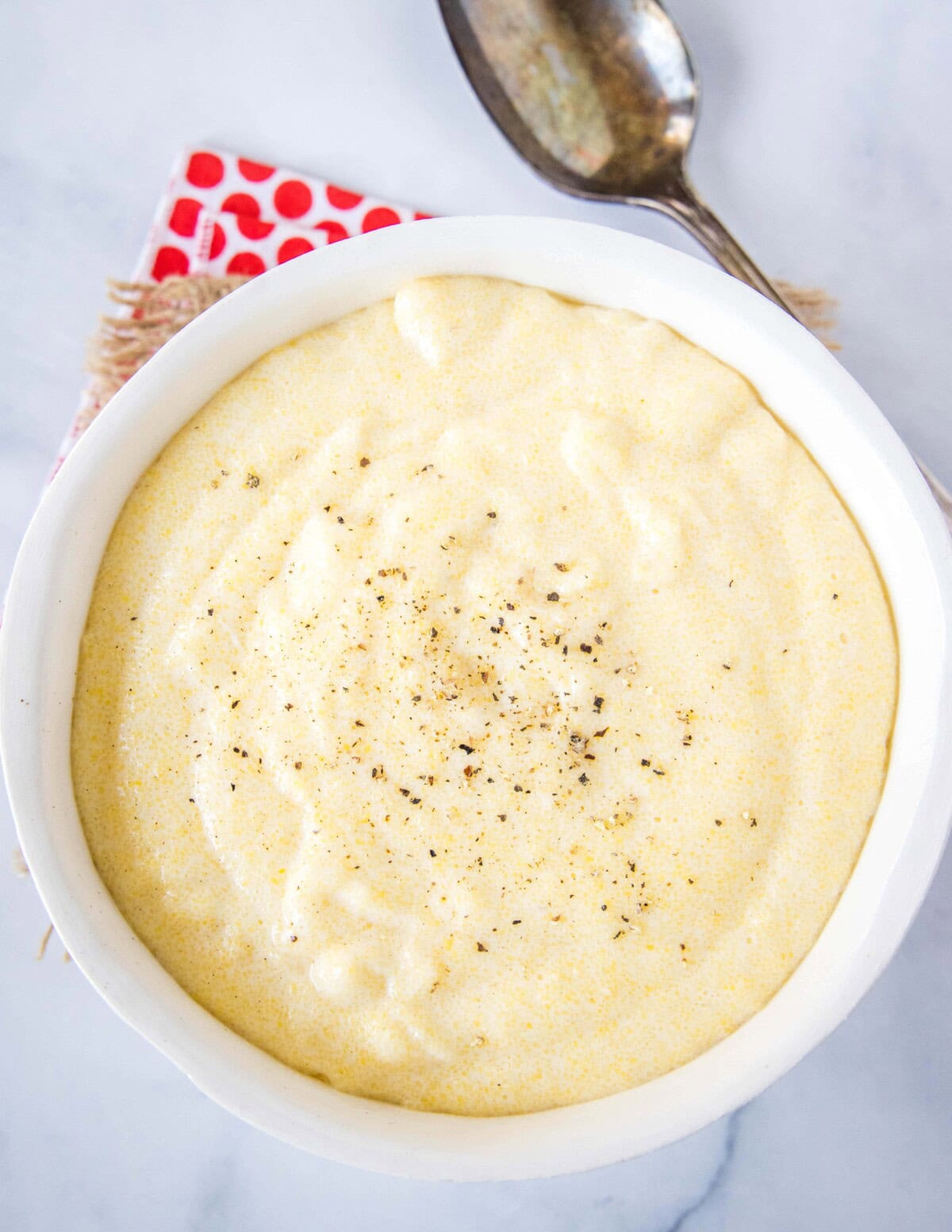
- Serve right away. Polenta is at its creamiest straight off the stove.
Recipe Tips
- Use a heavy-bottomed saucepan. It spreads heat evenly and makes scorching much less likely.
- Pour slowly and keep stirring. Adding the polenta in a slow, steady stream while you stir or whisk is the best way to prevent lumps. If a few lumps do form, a whisk will usually break them up.
- Keep the heat low. Thick polenta bubbles and can spatter, so once the grains are in, turn the heat down and let it simmer gently.
- Take it off a little loose. Polenta keeps thickening as it sits, so stop cooking when it’s just a bit looser than you want to serve it.
- Loosen as needed. If it gets too thick, stir in a splash of warm milk or broth until it’s creamy again.
- Watch the salt with regular broth. I use low-sodium broth with the full teaspoon of salt. If your broth is regular, add the salt a little at a time and taste as you go.
Polenta Variations
- Add cheese: Stir in some grated parmesan, pecorino romano, or shredded cheddar along with the cream cheese.
- Change the seasoning: Leave out the salt and use an equal amount of seasoned salt, Cajun seasoning, seafood seasoning, or Italian Seasoning instead.
- Make it vegetarian: Use vegetable broth in place of the chicken broth.
- Butter it up: Stir in a pat of butter at the end for extra richness, or use full-fat cream cheese for a thicker, more decadent polenta.
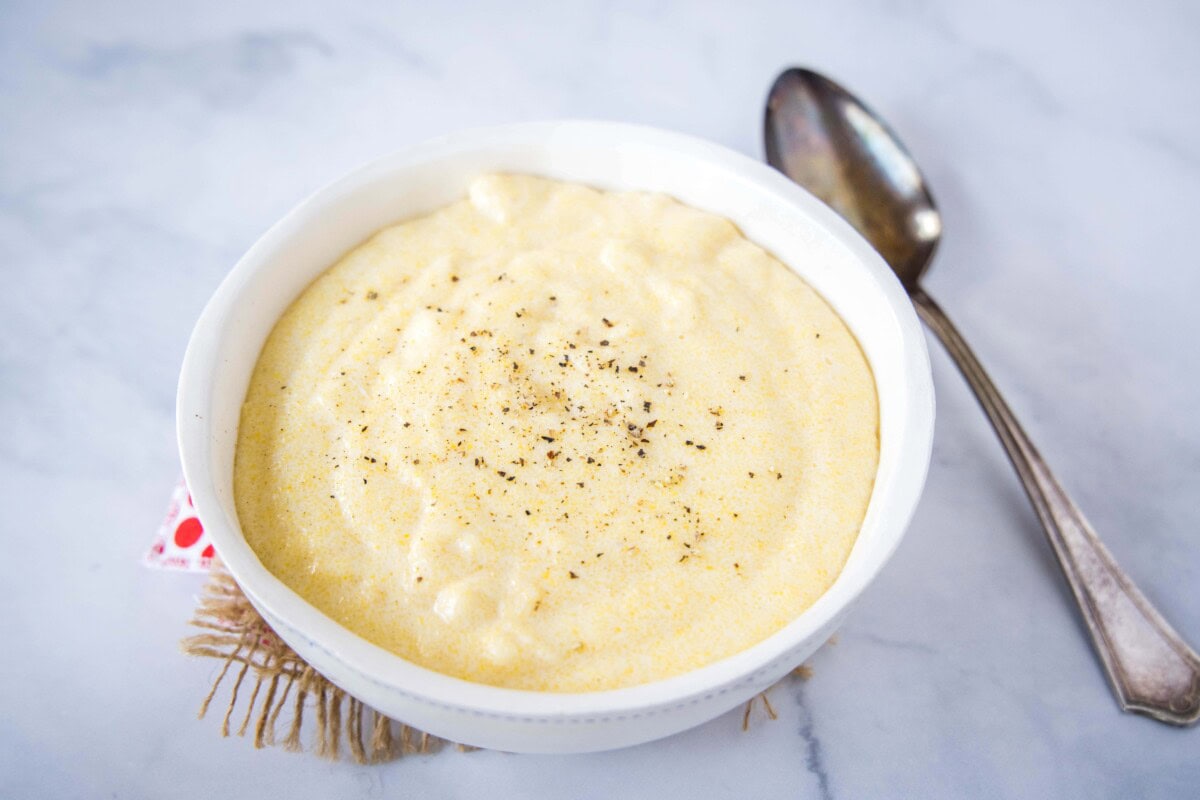
- Finish with pepper: A little freshly cracked black pepper is always a good idea.
Make Ahead & Storage
To make ahead: Creamy polenta is best served fresh, but it can be made ahead for a big dinner. Store it in an airtight container in the fridge for up to 3 days. It will firm up as it chills, which is completely normal.
To reheat: Add the polenta to a saucepan over medium-low heat with about 1/4 cup of chicken broth or water. Stir often, breaking it up as it warms, until it’s smooth and creamy again. Add a little more liquid if needed. Salt can taste muted after chilling, so taste and adjust the seasoning before serving.
Not quite. Both are ground corn, but polenta is traditionally a coarse yellow corn grind, while grits are usually made from white corn (and sometimes hominy). Grits are generally softer and smoother. You can swap them in this recipe, but the texture and cooking time will be a little different.
Lumps usually happen when the polenta is added too fast or isn’t stirred enough at the start. Pour it into the simmering liquid slowly while stirring constantly. If lumps still form, whisk them out before the polenta gets too thick.
Yes! Vegetable broth makes it vegetarian, and water works too. Water will give you a milder flavor, so you may want to add a little parmesan or extra seasoning.
MORE QUICK SIDE DISHES TO TRY
Love how quick and simple this polenta was to make? Check out one of my other delicious side dishes.



This looks so good, I cannot wait to try it!
We love polenta! This looks so creamy and incredibly delicious! Can’t wait to try it!
I love how easy and delicious this polenta is!! My family would love it!
Love this!
Oh my goodness! This creamy polenta is perfect for dinner tonight!
Super easy and vesatile side. I make it often.
This is so creamy! I love it!!
I was looking for an additional side to go with my lamb chops and asparagus and came across this recipe and decided to give it a try. The polenta came out very creamy and had great flavor, the only change I will make next time is to reduce the amount of salt, as I was putting in the salt I was saying to myself this looked liked a lot but I wanted to follow the recipe as instructed, overall it is a good recipe and I will make again
Can you shape it once cooled?
No, it is creamy. You would need to change the recipe to make it thick enough to shape