

This post may contain affiliate links. Please see my disclosure policy
Classic Oatmeal Bread is a soft, tender homemade loaf made with old-fashioned oats. Learn how to store it, freeze it, and make the dough ahead of time for fresh bread anytime.
To me there is just something about fresh bread baking in the oven. It fills the house with the best aroma, and you just instantly feel calmer. If you are having a stressful day, kneading dough is a great way to work it out! There is just something about kneading the dough and watching it rise just makes everything better.
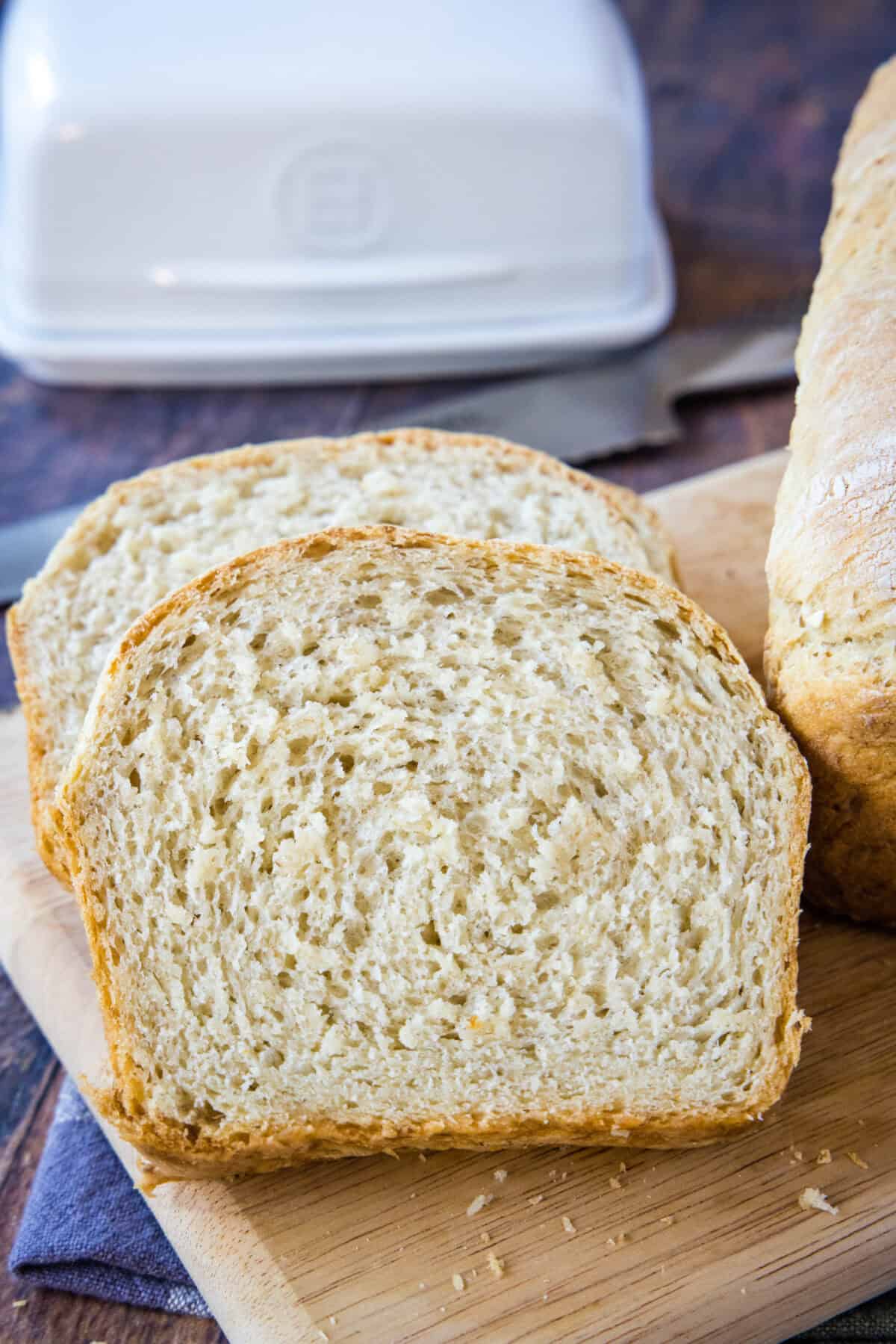
I know that baking bread intimidates a lot of people, but it doesn’t have to! If you measure correctly, and follow the directions everything should come out perfectly! I used to be scared of yeast, but after some trial and error, and realizing when it says to knead for 8 to 10 minutes, they really mean it. Homemade bread really is simple to make and doesn’t involve a lot of ingredients. Just a little bit of time!
Erin’s Notes
- Soft, tender crumb thanks to the rolled oats — perfect for sandwiches or toast
- Simple pantry ingredients, no fancy equipment required
- Naturally lower in sugar than most store-bought sandwich breads
- The dough can be made ahead and refrigerated, so fresh bread is always within reach
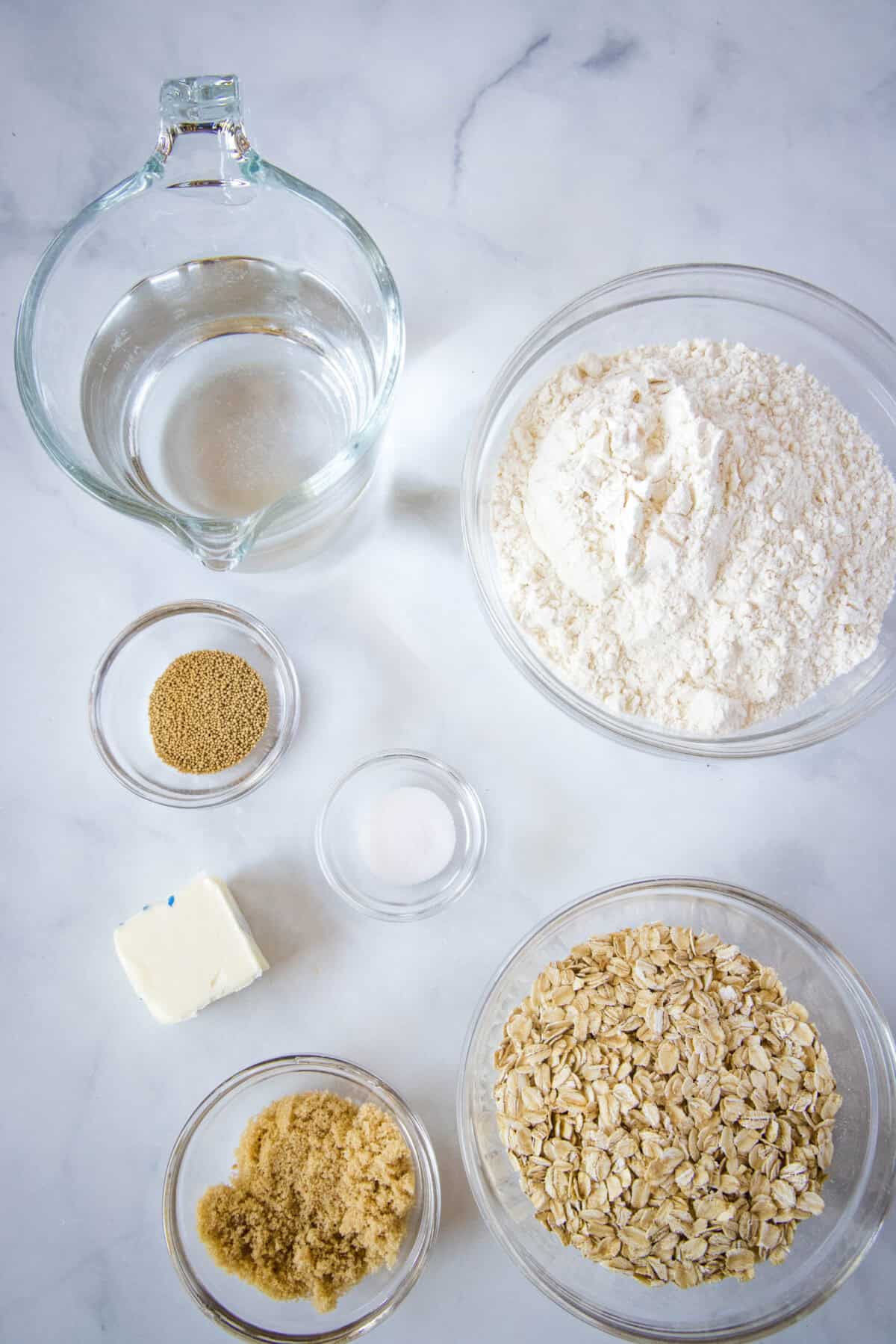
Ingredients You’ll Need
- Water
- Rolled Oats – You want to use old fashioned oats. This is not the time to break out the steel cut oats or anything else. They soften in the boiling water and give just the right texture, so stick with the old fashioned ones for this recipe.
- Yeast – active dry yeast is called for in this recipe
- All-Purpose Flour
- Brown Sugar
- Salt
- Butter
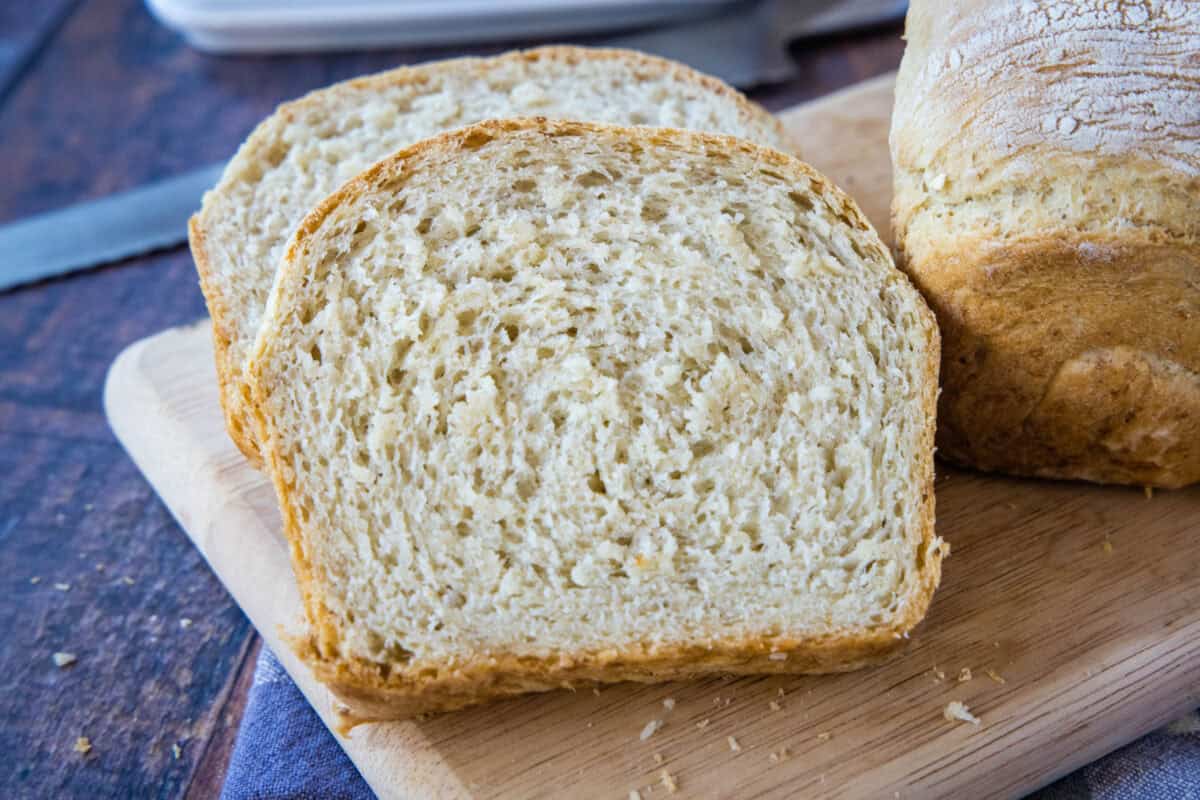
Classic Oatmeal Bread
Ingredients
- 1 cup old fashioned rolled oats
- 1 cup boiling water
- 1/2 cup warm water, 110-115 degrees
- 2 1/4 teaspoons active yeast, 1 package
- 2 1/2 cups all-purpose flour
- 2 Tablespoons brown sugar
- 1 teaspoon salt
- 2 Tablespoons butter, cut into 12 pieces
Instructions
- In a small bowl pour boiling water over the oats. Set aside until it comes to room temperature.1 cup old fashioned rolled oats, 1 cup boiling water
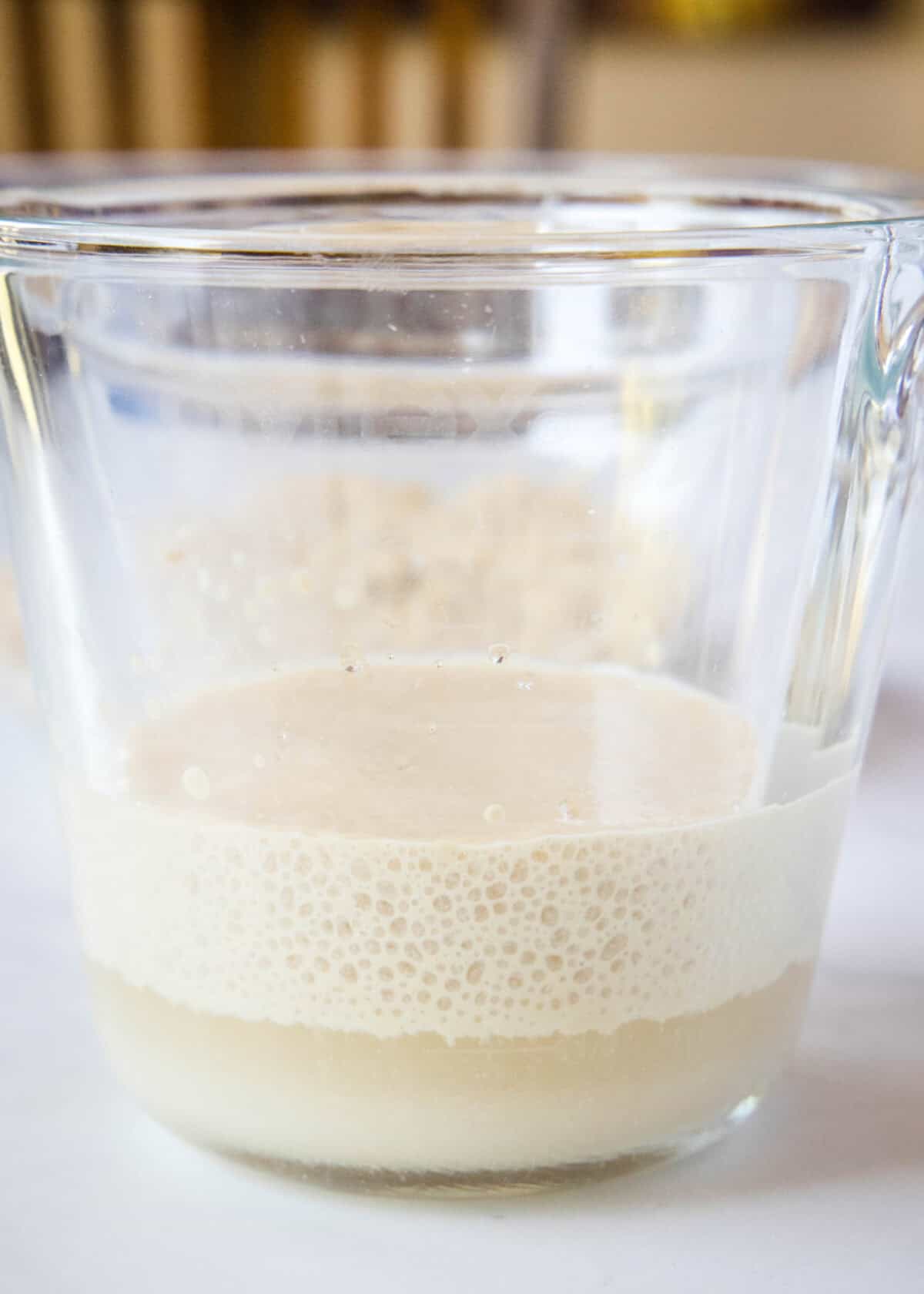
- In a liquid measuring cup mix together the warm water and yeast. Let sit for a few minutes until foamy.1/2 cup warm water, 2 1/4 teaspoons active yeast
- In a large bowl combine flour, brown sugar, and salt. Once the oats of cooled add them, the yeast mixture, and butter pieces to the flour. Mix until everything is well combined, and a dough starts to form.2 1/2 cups all-purpose flour, 2 Tablespoons brown sugar, 1 teaspoon salt
- Once the oats of cooled add them, the liquid yeast mixture, and butter pieces to the flour. Mix until everything is well combined, and a dough starts to form.2 Tablespoons butter
- Turn onto a floured surface and knead for 5-6 minutes, until smooth. Add additional flour if the dough gets too sticky.
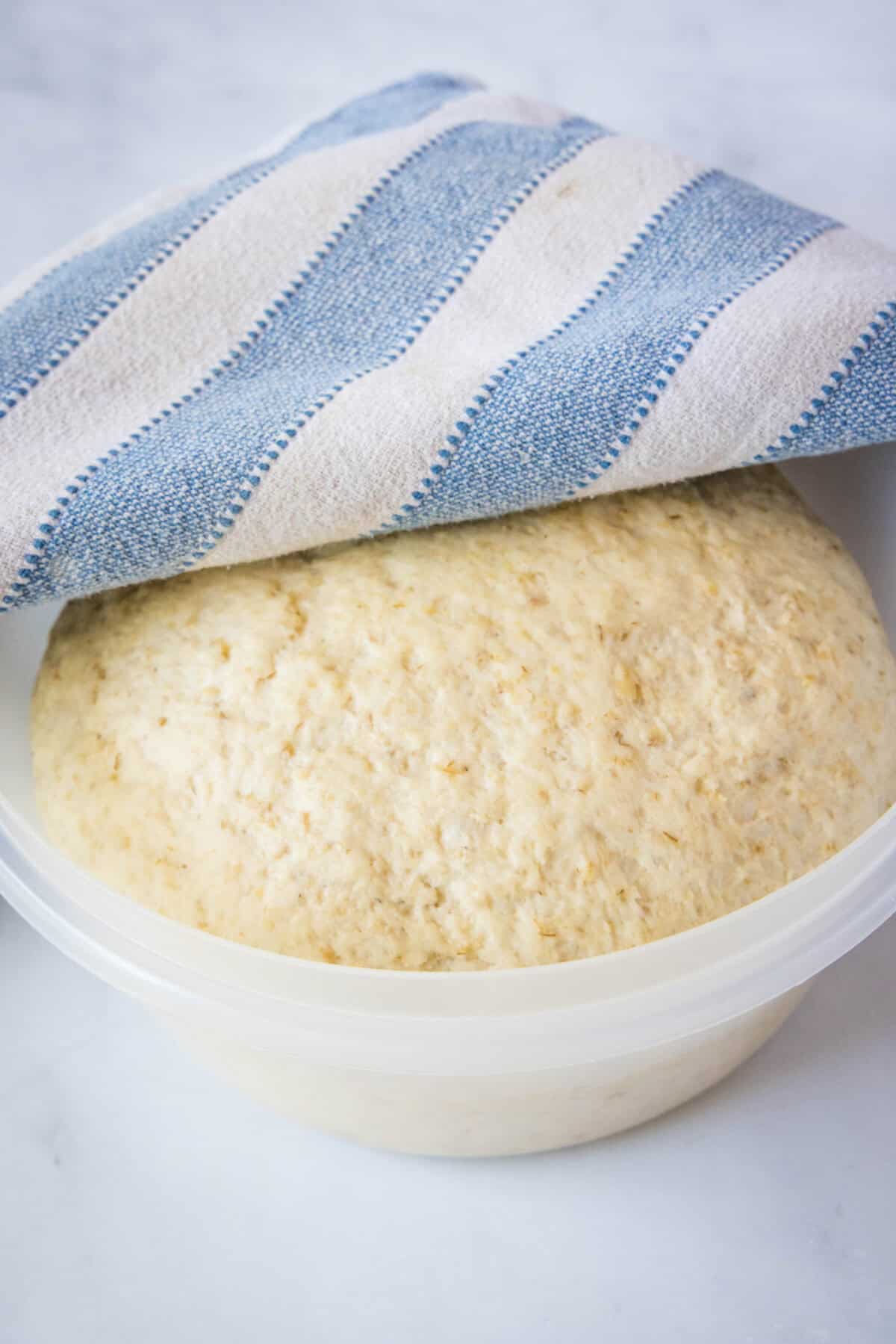
- Place dough in a greased bowl. Cover and let rise until double in size, about an hour.
- Grease a 9×5 inch loaf pan. Set aside.
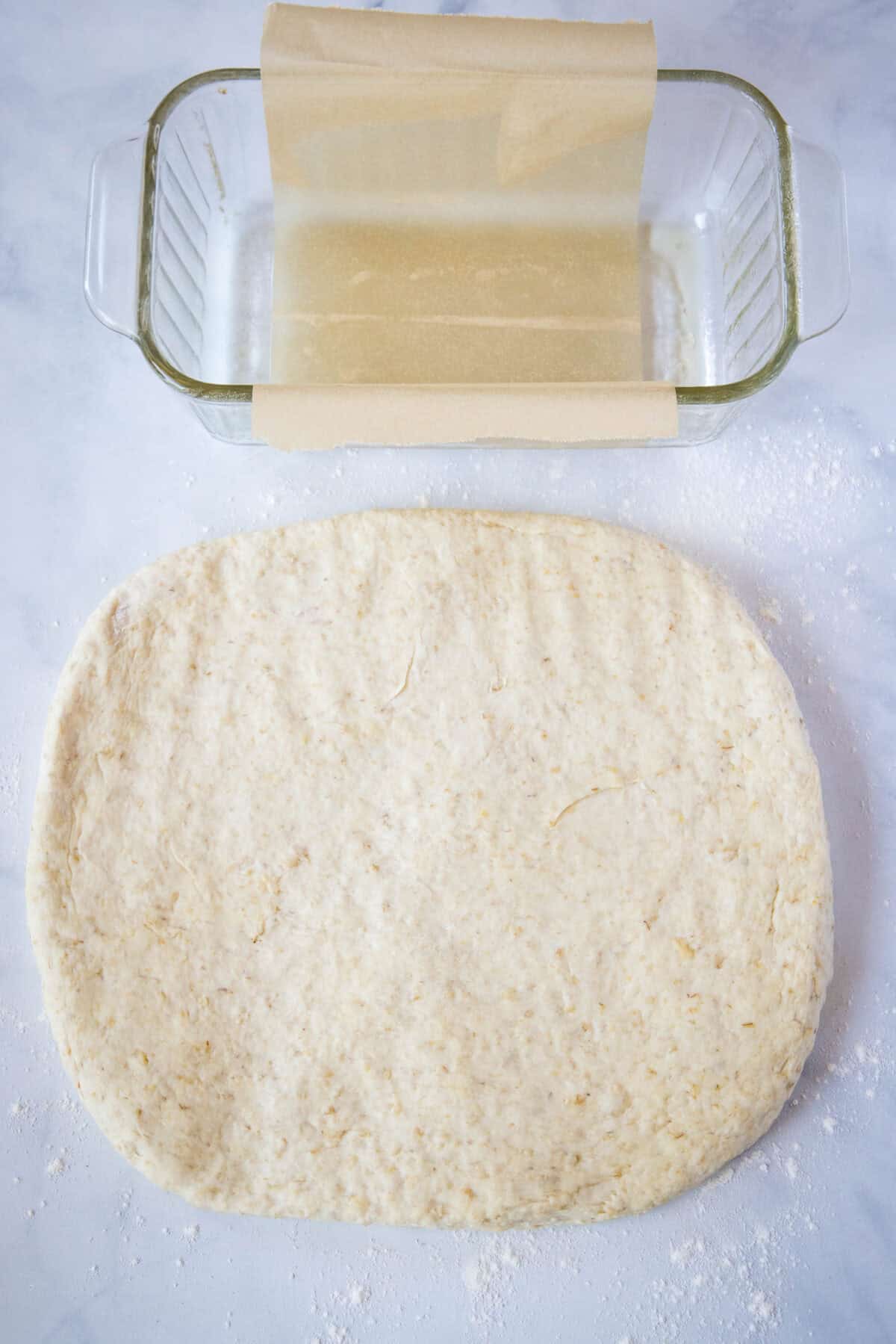
- Turn dough onto a lightly floured work surface, deflate with the palm of your hand. Gently shape the dough into a rectangle that is slightly longer than your bread pan.
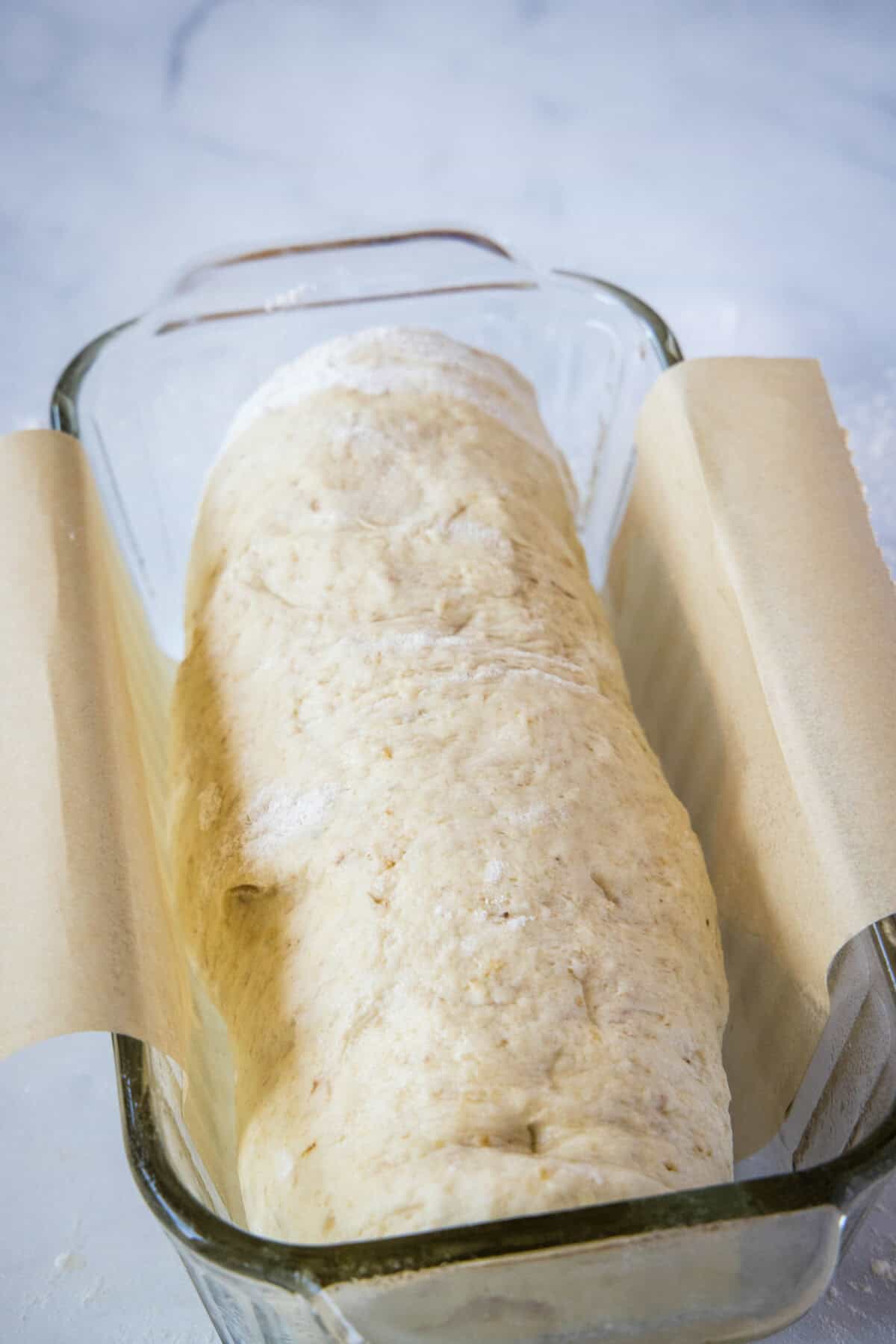
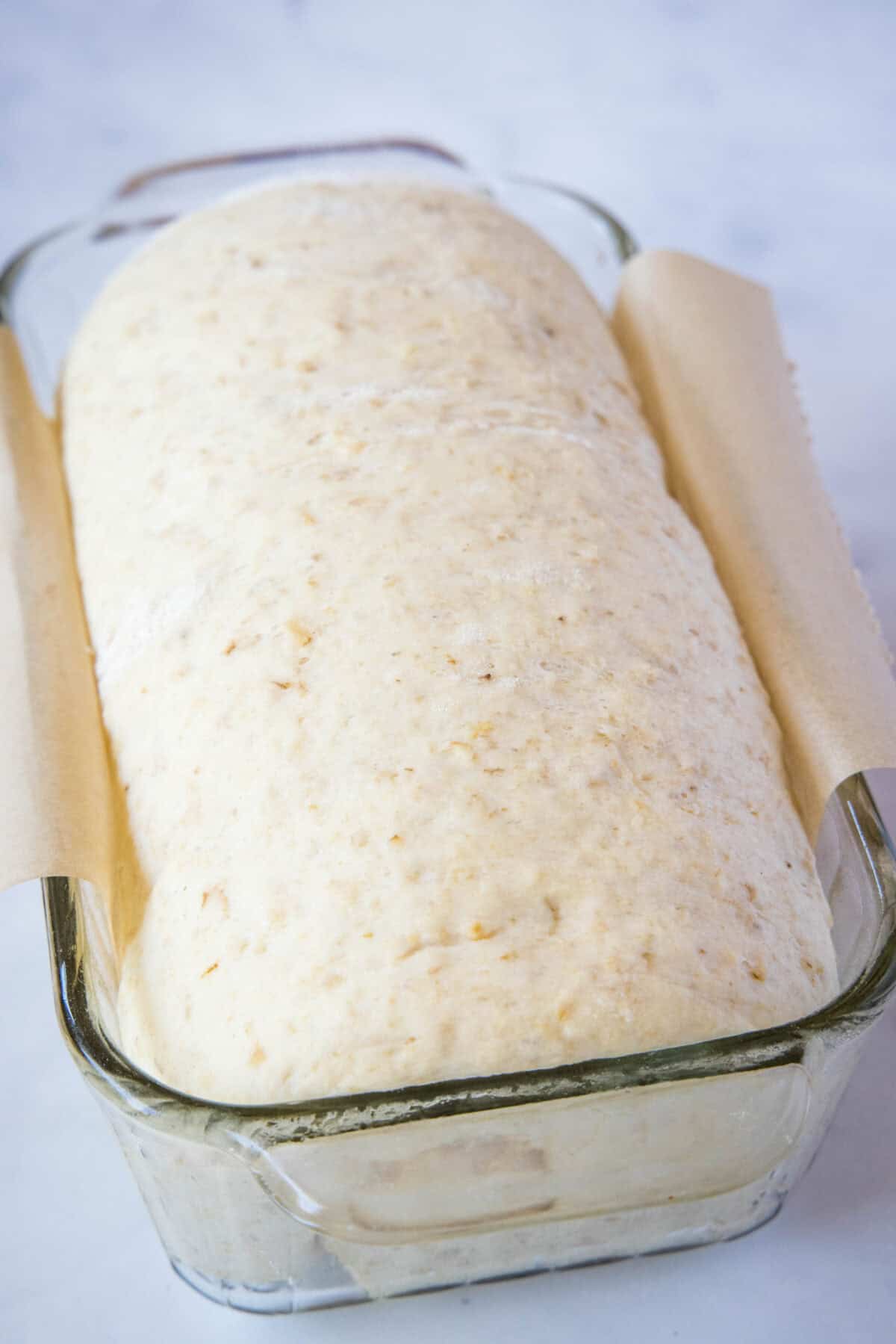
- Fold the sides in so the dough is now slightly shorter than the bread pan. Roll into a tight cylinder and place seam side down into prepared bread pan. Cover and let rise until doubled in size, about an hour.
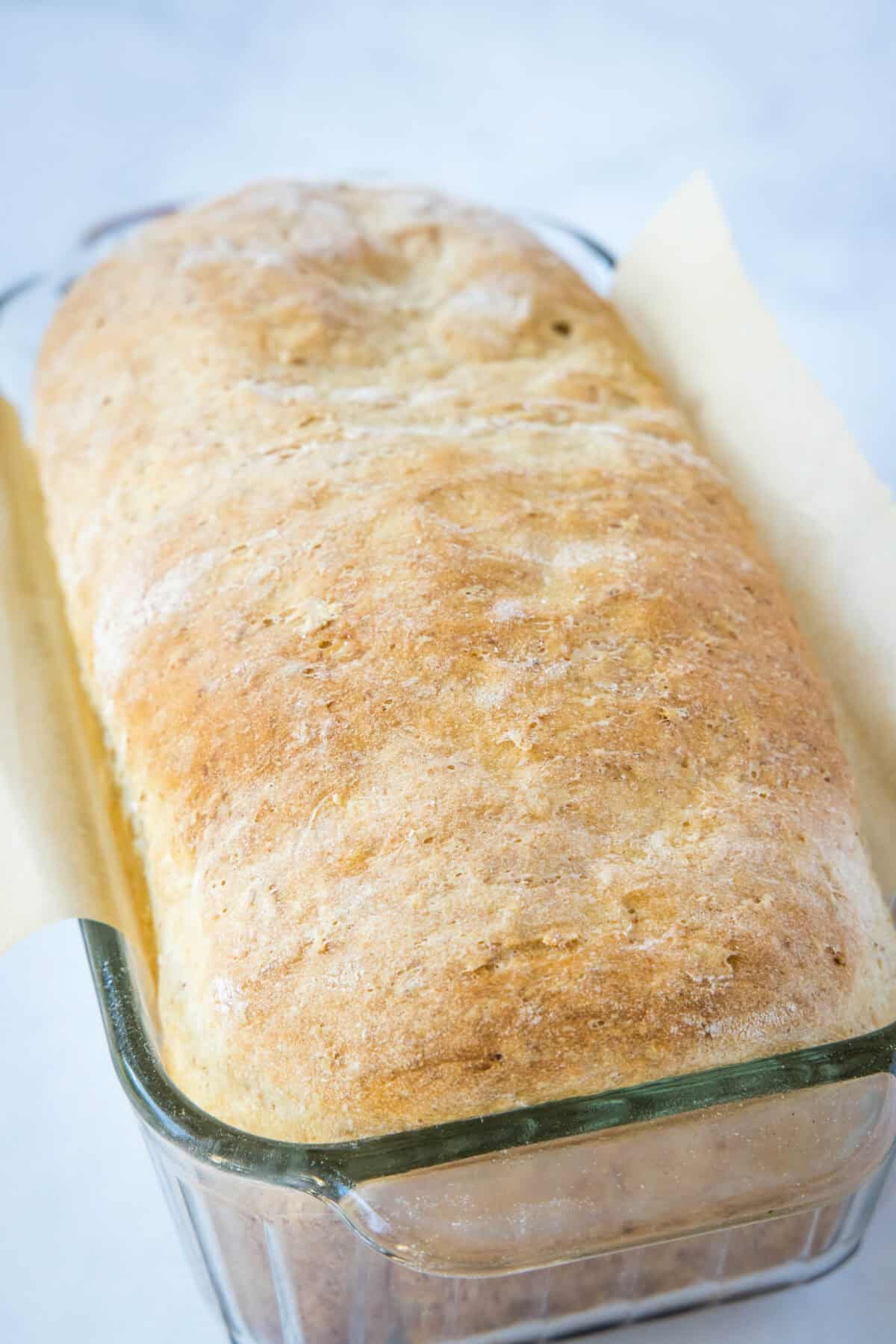
- Preheat oven to 375º F. After the dough has risen, remove the cover, and place in the oven. Decrease the temperature to 350º F, and bake for 40-45 minutes. It will sound hollow when taped on, and the internal temperature will be 210º F when it is done.
- Remove from pan, and cool on a wire rack.
Nutrition
Nutrition information is automatically calculated, so should only be used as an approximation.
How to Make Oatmeal Bread
- Soften the oats. Pour the boiling water over the rolled oats in a small bowl and set aside until they come to room temperature. Don’t rush this step — the oats need time to fully absorb the liquid, or they’ll throw off the texture of your dough.
- Activate the yeast. In a liquid measuring cup, stir together the warm water and yeast. Let it sit for 5-10 minutes until it’s foamy on top. If it doesn’t foam, your yeast is dead or the water was the wrong temperature — toss it and start over so your loaf actually rises.
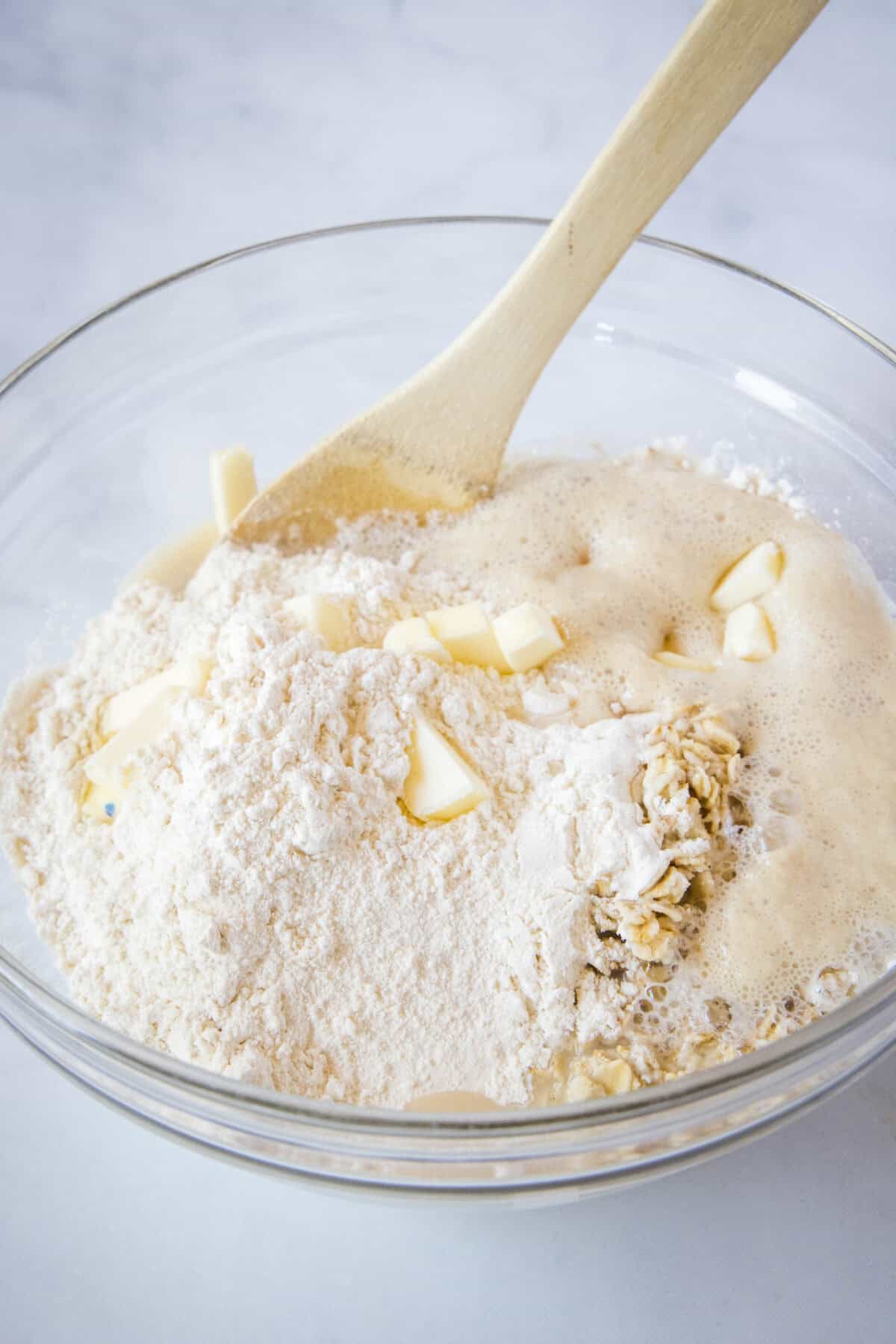
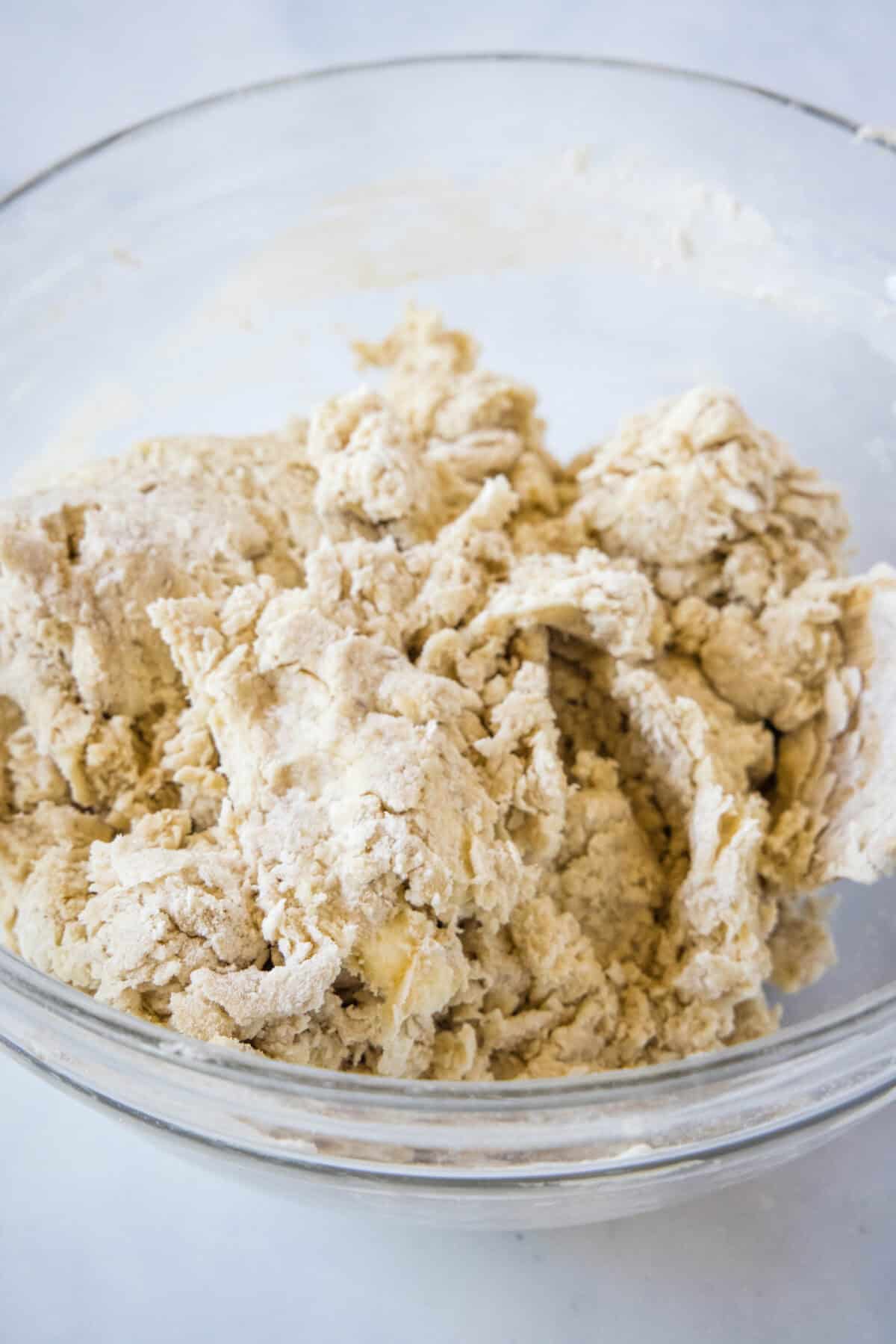
- Mix the dough. In a large bowl (or the bowl of a stand mixer), combine the flour, brown sugar, and salt. Once the oats have cooled, add them along with the yeast mixture and butter pieces. Mix until everything comes together and a shaggy dough starts to form.
- Knead. Turn the dough onto a floured surface, or use the dough hook on your stand mixer, and knead for 5-6 minutes until it’s smooth and elastic. Add a little extra flour if it’s sticking too much, but go easy — too much flour makes for a dense loaf.
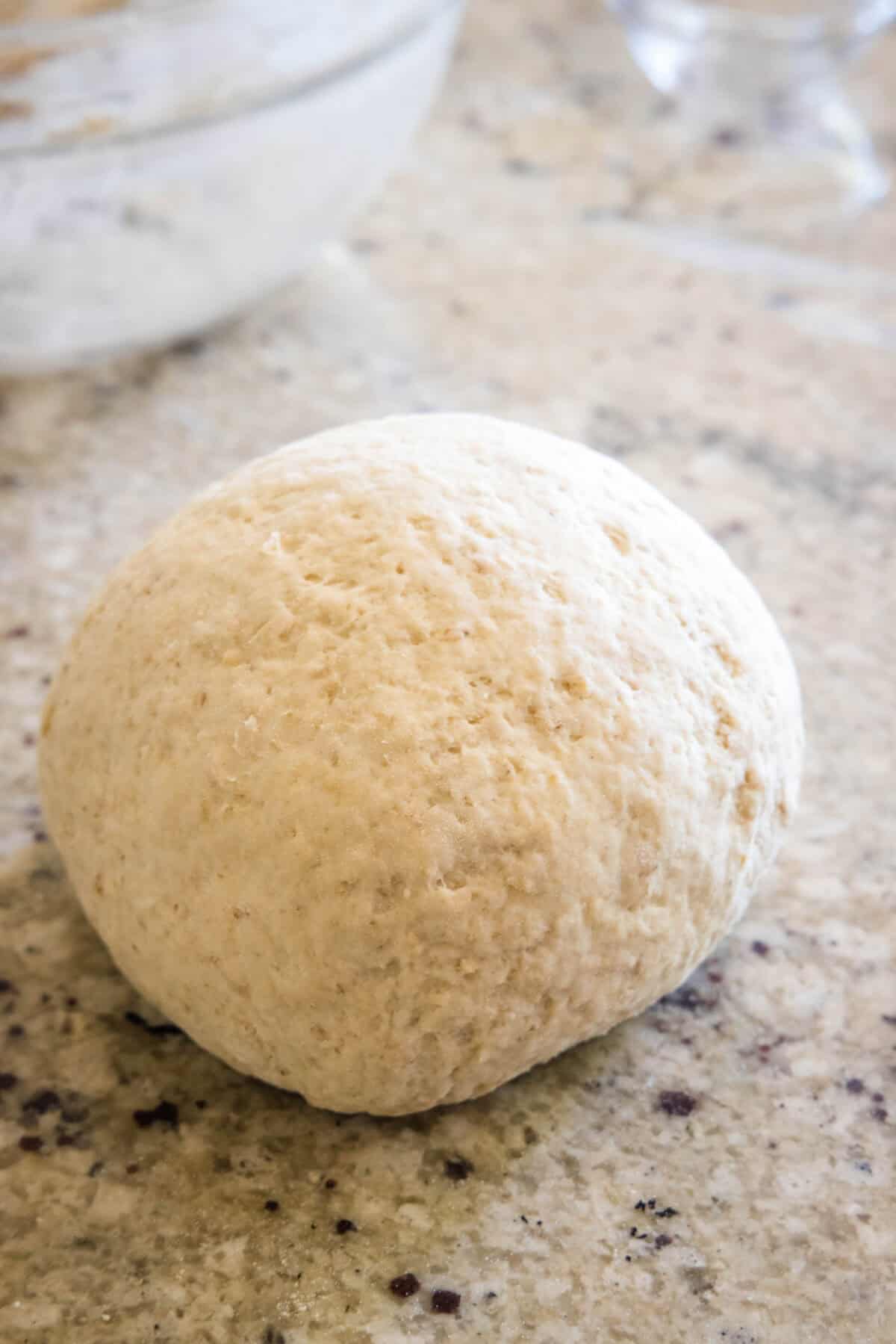
- First rise. Place the dough in a greased bowl, cover, and let it rise until doubled in size, about an hour.
- Shape the loaf. Turn the dough out and gently deflate it. Shape it into a rectangle slightly longer than your loaf pan, fold the sides in so it’s slightly shorter than the pan, then roll it into a tight cylinder. Place it seam-side down in your prepared pan.
- Second rise. Cover the pan and let the dough rise again until doubled, about another hour.
- Bake. Preheat the oven to 375 degrees, then place the risen loaf in and immediately drop the temperature to 350. Bake for 30-40 minutes, until it sounds hollow when tapped and reads 210 degrees on an instant-read thermometer. Cool on a wire rack before slicing.
Can You Make the Dough Ahead of Time?
Yes! This is a great make-ahead bread. After the first rise (step 5), place the dough in a covered, greased bowl and refrigerate for up to 24 hours instead of letting it rise at room temperature. When you’re ready to bake, take the dough out, let it come to room temperature for about 20-30 minutes, then shape, do the second rise, and bake as directed. This is an easy way to have fresh bread without needing several hours free in one stretch. You can start the dough after dinner and bake it the next morning.
Tips for Making Oatmeal Bread
- Make sure to follow the recipe for the temperature of the water. If you use too hot it will kill the yeast and your bread will not rise. If it is too cold, the yeast will not react and it will not rise. So use a thermometer to get the right temperature.
- Yeast does expire, so check the date to make sure you are using fresh yeast.
- You can use a stand mixer with the dough hook attachment to knead the dough. It will knead for about 5 minutes. Just keep an eye on it to see if you need to add a little bit more flour to the bowl.
- The dough will rise best in a warm draft free place. If your oven has a bread proof setting, you can use it here. You can also preheat your oven to its lowest setting and then turn it off. Place the covered bowl of dough in the center and it will rise well.
- Variation: Honey Oatmeal Bread – Swap the 2 tablespoons of brown sugar for 2 tablespoons of honey for a slightly different sweetness and a softer crumb. Add it in with the wet ingredients.
Storage
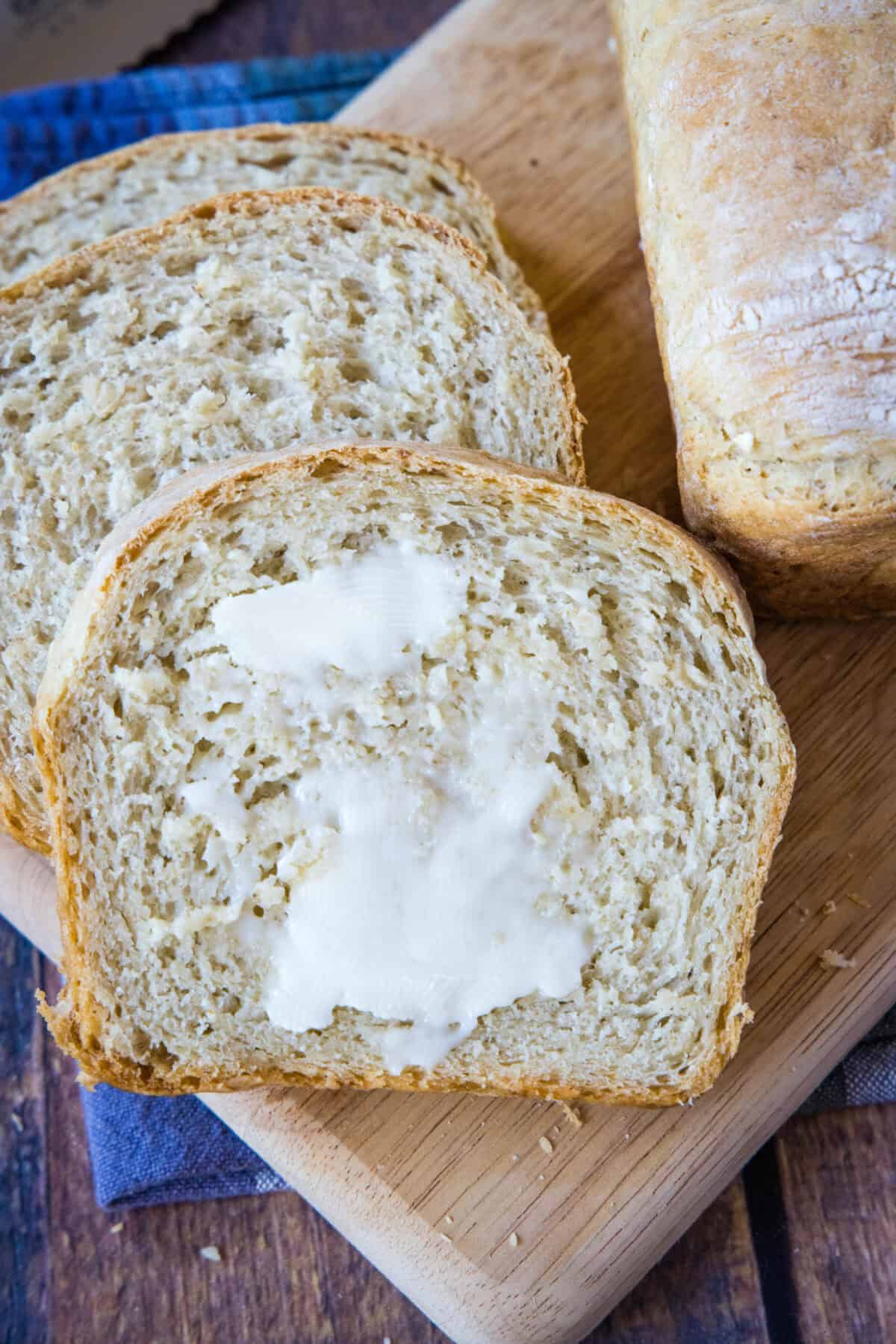
Room Temperature: Store the cooled loaf in an airtight bag or container at room temperature for up to 3-4 days.
Freezer: Wrap the fully cooled loaf tightly in plastic wrap, then foil, and freeze for up to 3 months. You can also freeze it pre-sliced so you can pull out individual pieces. Thaw at room temperature or toast slices straight from frozen.
The recipe calls for 2 1/4 teaspoons of active dry yeast, which is the same as one standard packet — not the same as a yeast “brick.” You only need one packet, not several.
This is almost always a yeast temperature issue. If your water was too hot (over about 110-115 degrees), it killed the yeast; if it was too cool, the yeast never activated. Always check that your yeast mixture turns foamy after 5-10 minutes. If it doesn’t, start over with fresh yeast and correctly temped water.
Old-fashioned rolled oats are recommended for this recipe. Quick oats absorb liquid differently and can make the bread gummy, and steel-cut oats won’t soften enough in the boiling water step.
Dense bread usually means the dough didn’t rise long enough, the yeast wasn’t active, or too much flour was added while kneading. Add flour gradually and only until the dough is smooth and just slightly tacky.
More Bread Recipes to Try
- Honey Butter Dinner Rolls
- Parmesan Garlic Knots
- Homemade Crescent Rolls
- Easy Biscuit Recipe
- Cheddar Beer Bread
- Best Cornbread Recipe




I need to try this! It looks really good!
This bread has the perfect texture!
I love the texture of this bread! It’s perfect!
I have never had Oatmeal Bread. But, I think it’s the perfect time to try it!
Clarifying question: does the recipe actually call for 2 and 1/4 teaspoons of yeast? I don’t usually buy the bricks which I think come in that size. I have the packets, so if I’m reading this right I need five packets of yeast? Seems like a lot, so I wanted to double-check!
Actually, disregard my question! I misread those darn packets!
Glad you figured it out! You just need 1 of the little packets. Hope you enjoy!